

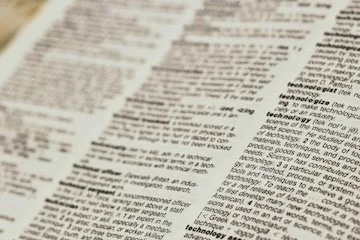
Cambridge Dictionary announced this month that human is the 2026 Word of the Year -- a selection propelled by extraordinary advances in artificial intelligence: “AI is changing how we talk about being human,” said one Cambridge Dictionary lexicographer.
Cambridge Dictionary defines human as “having the qualities, faults, and feelings that people have, as opposed to gods, animals, or machines.”
And as artificial intelligence advances, the boundaries between people and machines are increasingly more blurred. Computers can compose music, write poetry, replicate our voices, and generate remarkably convincing images of people who have never existed. Even the term human-made is becoming more prevalent as we seek to distinguish our own creative endeavors from those of artificial intelligence.
For all our technological sophistication, we find ourselves returning to one of the oldest and most fundamental questions of our existence: What does it mean to be human?
As Christians, we have a particularly compelling reason to reflect on that question. At the heart of our faith is the extraordinary claim that God chose to become human. In the opening chapter of John's Gospel, we read, "The Word became flesh and made his dwelling among us. We have seen his glory, the glory of the one and only Son, who came from the Father, full of grace and truth."
What a story: The Creator of the universe entered our world as an infant, entirely dependent on the care of others. He needed to be fed, clothed, and comforted. He had to learn to walk and talk. As an adult, Jesus experienced hunger and exhaustion. He enjoyed meals with friends, attended a wedding, wept at the grave of someone he loved, and felt the pain of betrayal. He knew both the delight and the difficulty of human relationships.
In becoming human, Jesus did not sidestep the vulnerabilities of our existence. He entered fully into them.
Much of our technological innovation is driven by a desire to transcend our human limitations, to perfect our imperfections. We want to accomplish more in less time, eliminate errors, access knowledge instantaneously, and reduce our dependence on others. And yet at the very center of our Christian faith is the story of an unlimited God willingly taking on human limitations.
What does that teach us about gratitude? In our pursuit of efficiency, productivity, and even perfection, we begin to regard our most human qualities as inconveniences. Grief interrupts our plans. Relationships require time. Our bodies need rest. Love asks us to relinquish control. And yet it is within these very limitations that we encounter God and learn to love one another more deeply.
Cambridge Dictionary has given us a particularly meaningful word to carry to our Thanksgiving tables tomorrow and into the season of Advent this Sunday.
In an age increasingly captivated by what machines can do, may we give thanks for the wonder of being human. And may we never lose our astonishment that, of all the ways God could have chosen to reveal himself to us, he chose to become one of us.
And the Word Became Flesh
Next
Next