

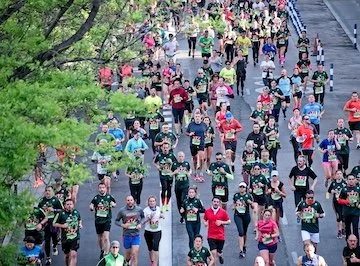
For most runners, a marathon already feels impossible: 26.2 miles, thousands of runners, crowded streets, noise, exhaustion, unpredictability.
For Clarke Reynolds, the challenge carried another layer. Diagnosed with Retinitis Pigmentosa as a child, Reynolds gradually lost his sight and became fully blind in his early 30s. On April 12, he became the first blind person to complete a full marathon using AI-powered smart glasses connected to remote volunteers around the world.
Reynolds wore Ray-Ban Meta smart glasses linked to an app called Be My Eyes. Through the glasses, volunteers could see the course from his perspective and speak directions directly to him in real time. Every 30 minutes, a new volunteer would rotate in, guiding him mile after mile through the crowded Brighton Marathon course in England.
Imagine the team effort: One volunteer might describe a sharp curve ahead. Another warned about congestion near a water station. Another simply offered encouragement.
Even in an age filled with advanced technology, Reynolds’ marathon ultimately depended on human voices. People he could not see helped him keep moving forward. Strangers became guides. Encouragement became endurance. As Reynolds himself reports, more than 300 volunteers worldwide assisted as he trained for and completed the marathon.
Scripture speaks often about this kind of shared journey. In Ecclesiastes 4, we read: “Two are better than one… If either of them falls down, one can help the other up.”
The church has always been called to live this way. We notice one another. We carry burdens together. Sometimes we walk beside someone physically. Sometimes we become the steady voice reminding another person that the next step is still possible.
In Reynolds’ story, the volunteers never crossed the finish line themselves; most remained unseen. And yet their voices mattered deeply.
This week, listen carefully for opportunities to become that kind of voice for someone else. How can you help another person find the next turn in the road?
Running By Faith
Previous
Previous
The Pace of Presence
Next
Next