

This past Sunday, I mentioned the death of Annie Dillard, one of the most distinctive American writers of the past half-century. Dillard died September 15 at age 81, and during worship I read a short passage from Pilgrim at Tinker Creek as our Call to Worship.
Last week, The Christian Century published a beautiful reflection by Amy Frykholm titled “Annie Dillard’s Unrestrained Hallelujah.” Frykholm describes what happened when she first encountered Dillard’s writing nearly 35 years ago. She was living in Estonia and picked up a copy of Dillard’s Pulitzer Prize-winning Pilgrim at Tinker Creek. She read the essay “Seeing,” and afterward she began noticing the world differently.
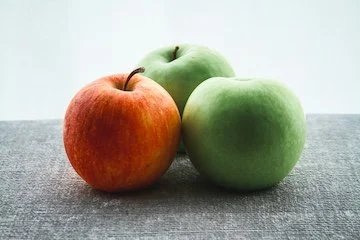
As Frykholm writes in her tribute to Dillard, a woman selling three wrinkled apples beside a train station suddenly mattered. Ordinary objects carried new weight. Everyday moments demanded attention.
That was one of Dillard’s great gifts: She paid attention. She noticed what most of us walk past. She watched animals, insects, trees, rivers, people, light, darkness, beauty, violence, silence. Then she stayed with what she saw long enough to ask what it might mean.
Dillard won the Pulitzer Prize in 1975 for Pilgrim at Tinker Creek, and her books include Holy the Firm, Teaching a Stone to Talk, An American Childhood, and The Writing Life. But awards and titles do not quite explain why her writing has mattered to so many people.
Dillard wrote as though the world were worth noticing.
Frykholm calls Dillard’s work an “unrestrained hallelujah” -- an exuberant response to a world that is astonishing, bewildering, sometimes frightening, and somehow still holy.
Dillard did not offer easy answers. Her writing is full of questions about what we can see, what we can understand, and whether language can ever fully capture what we experience.
In one reflection on her own Christian faith, Dillard writes, “I know only one thing for certain: there is holiness.”
The world does not need to become extraordinary before it deserves our wonder. We need to learn how to see what is already there. Sometimes the light through the trees can be enough. So can the bird outside the window, the person across the table, the first signs of a changing season, or some small thing we nearly missed because we were moving too quickly.
If you have never read Dillard, this is a good week to begin. Pick up Pilgrim at Tinker Creek or Teaching a Stone to Talk. Read slowly. Let her teach you to notice the world around you.