

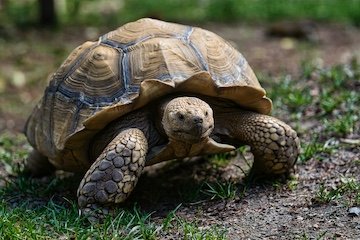
In a remote corner of the Indian Ocean some 250 miles northwest of Madagascar, one of the world's slowest-moving creatures is making one of conservation's most remarkable comebacks: On Aldabra Atoll, part of the Seychelles island nation off the eastern coast of Africa, researchers have counted an estimated 183,000 giant tortoises. That's more tortoises on one island group than people in the entire country.
And what's remarkable is just how close we came to losing them entirely.
During the 19th century, sailors and settlers hunted Aldabra giant tortoises so heavily that their population dropped below 1,000. These enormous creatures, some weighing more than 500 pounds and living well over a century, were nearly wiped out.
But in 1981, Aldabra became a protected nature reserve. The following year, UNESCO designated it a World Heritage Site. Conservationists began the patient work of protecting the tortoises and their habitat, knowing that recovery would take generations.
Last week, researchers from the Seychelles Islands Foundation and the University of Exeter announced the results of a study based on five years of population monitoring. Their estimate of nearly 183,000 tortoises is the highest ever recorded, although improved counting methods explain some of the increase over earlier estimates.
One famous Seychelles tortoise named Jonathan is now 194 years old. He lives on the island of St. Helena, where he arrived in 1882, already estimated to be about 50 years old. To put that in perspective, Jonathan was alive when Abraham Lincoln was president, when the first automobiles were invented, and when humans first walked on the moon. And he's still here, moving at his own pace.
In Galatians 6:9, the apostle Paul writes, "So let us not grow weary in doing what is right, for we will reap at harvest time, if we do not give up."
Paul understood that faithful work doesn't always produce immediate results. The people who began protecting Aldabra's tortoises in 1981 couldn't know what the population would look like 45 years later. They recognized something worth saving and committed themselves to the work.
That's part of living faithfully in the gray, as we are exploring each Sunday in our "God in the Gray" sermon series. We may not know how our efforts will turn out, but we can still choose to invest in what matters, trusting that the work we do today may bear fruit long after we've moved on.
So this week, consider something in your life that deserves your continued attention: a relationship you've been nurturing, a commitment you've made, a person who needs your encouragement, or a ministry whose impact may take years to become visible.
And keep showing up. After all, 183,000 giant tortoises are living proof that some of the best things in life take time.