

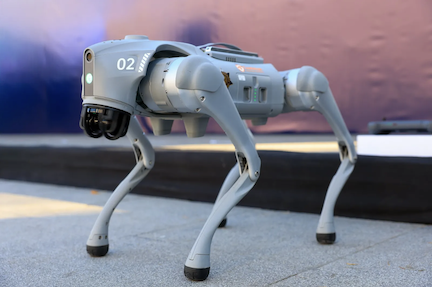
Imagine arriving at MetLife Stadium outside New York City for a World Cup match and spotting what looks like a dog trotting along the perimeter. It has four legs, it moves with a surprisingly natural gait, and it patrols the area with purpose.
But then you realize it isn't a dog at all. It's a robot.
This summer, four-legged robotic "dogs" are helping to provide security at select FIFA World Cup locations, including MetLife Stadium and the International Broadcast Center in Dallas, the technological hub that sends World Cup coverage around the globe. Similar machines are also being deployed around venues in Mexico.
About the size of a medium dog, these robots can climb stairs, navigate uneven terrain, operate in darkness, and carry cameras and sensors that relay information to human operators. They move with an uncanny combination of precision and agility -- enough to make passersby stop and stare.
Not long ago, such a sight would have belonged in a science-fiction novel. But today, robotic dogs are being used for everything from industrial inspections to disaster response. At the World Cup, they are helping security teams monitor large facilities and identify potential concerns before problems escalate.
According to authorities at Mexico's Guadalupe stadium, the robodogs were created to assist police with initial intervention in high-risk situations, transmitting video back to their human handlers. They do not make decisions or operate alone; each K9-X unit is controlled by a human who manages them much like a video game or drone.
And before you bemoan the rise of artificial intelligence, remember that this story ultimately is a reminder that human beings have always been creators.
From the opening chapters of Genesis, God entrusts creation to human hands. We build. We invent. We solve problems. We develop tools that help us accomplish tasks that once seemed impossible. In a sense, these robotic dogs are not a departure from the biblical story. They are evidence of the creativity God has woven into humanity from the beginning.
Yet Scripture reminds us that we are more than inventors. Human beings are distinguished by their relationship with God and with one another. We are capable of worship, compassion, forgiveness, sacrifice, and love. We are image-bearers.
As remarkable as these robotic dogs may be, they cannot rejoice with those who rejoice or weep with those who weep. They cannot pray for a neighbor, comfort a grieving friend, or extend grace to someone who has fallen short. They cannot bear God's image in the world.
So this week, take time to encourage someone. Listen carefully, offer kindness, pray for a friend, extend forgiveness where it is needed. Robotic dogs may be patroling the World Cup, but the world still needs what only humans can give.